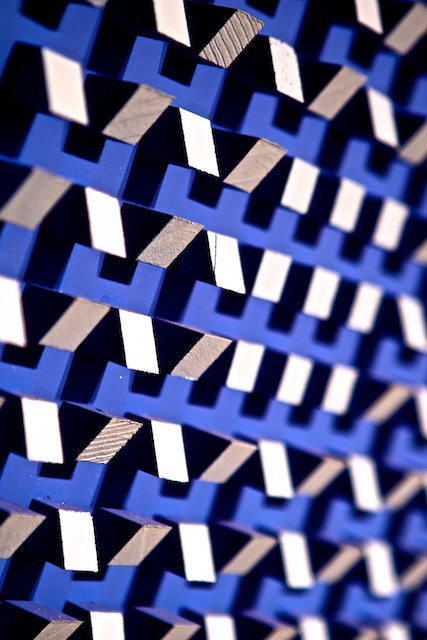
Knowing how to use contrast will help you create eye-catching images. Contrast is a tool that photographers use to direct viewer’s attention to their subject. There are two types of contrast: Tonal Contrast and Color Contrast. Tonal contrast refers to the difference in tones from the lightest tone to the darkest tone, in other words, the difference in tones from white to gray to black. Color contrast refers to the way colors interact with each other.

Tonal Contrast is normally described as high, normal or low. A high contrast image mainly includes white and black with few or no middle grey tones. A normal contrast image will have elements that are white, some that are black and many middle tones of grey. A low contrast image is the one with almost no highlights or shadows; all the tones are very similar one to the other. High contrast images are harsh while low contrast images are soft.

Color contrast is used to achieve great compositions. Colors with opposite characteristics, like blue and yellow, contrast strongly when placed together. When two opposing colors are placed together they complement and accentuate the qualities of the other color. Cold colors and warm colors almost always contrast, light colors contrast against dark ones and bold colors offset weak colors.

Composition in photographs is also classified as low and high key scenes. When an image contains mostly dark tones or colors it is referred to as low key, when it contains light tones or colors it is said to be high key. Low and high key images transmit moods. Normally a low-key image is serious and mysterious while a high-key image creates a feeling of lightness and delicate subjects.

Silhouettes are a good example of tonal contrast. Silhouettes are created through a sharp difference between dark and light areas. Color contrasted images contain complementary, or also called opposite, colors. Two colors on the opposite side of the color wheel create contrasting colors. Yellow & Blue or Green & Red create contrasting images that grab attention.

The important part is to learn how to combine and use to your advantage tonal contrast and color contrast or even how to compensate them when used separately. Great color contrast is a great way to compensate for tonal contrast. An image with low tonal contrast can be improved by incorporating a contrasting color into it.

A photo with low contrasting colors, for example, yellow and orange, can look great if a tonal contrast is accomplished by using lighter and darker yellows and oranges. Photos with low contrasting colors are quieter but generally great for seasonal and landscape images.

Another characteristic that impacts contrast is color saturation. Color contrast improves as the vibrancy of the colors increase. When the tonal contrast is very similar between colors, color contrast is reduced, as color saturation increases color contrast takes over.

Color contrast works better when using few and larger color masses. As more colors are incorporated then tonal contrast takes over.

Learning how to use and incorporate contrast in your images will certainly produce amazing results. Contrast will turn your images into an eye-catching photo and properly used can turn an ok photo into an awesome creation.